
Sinopec
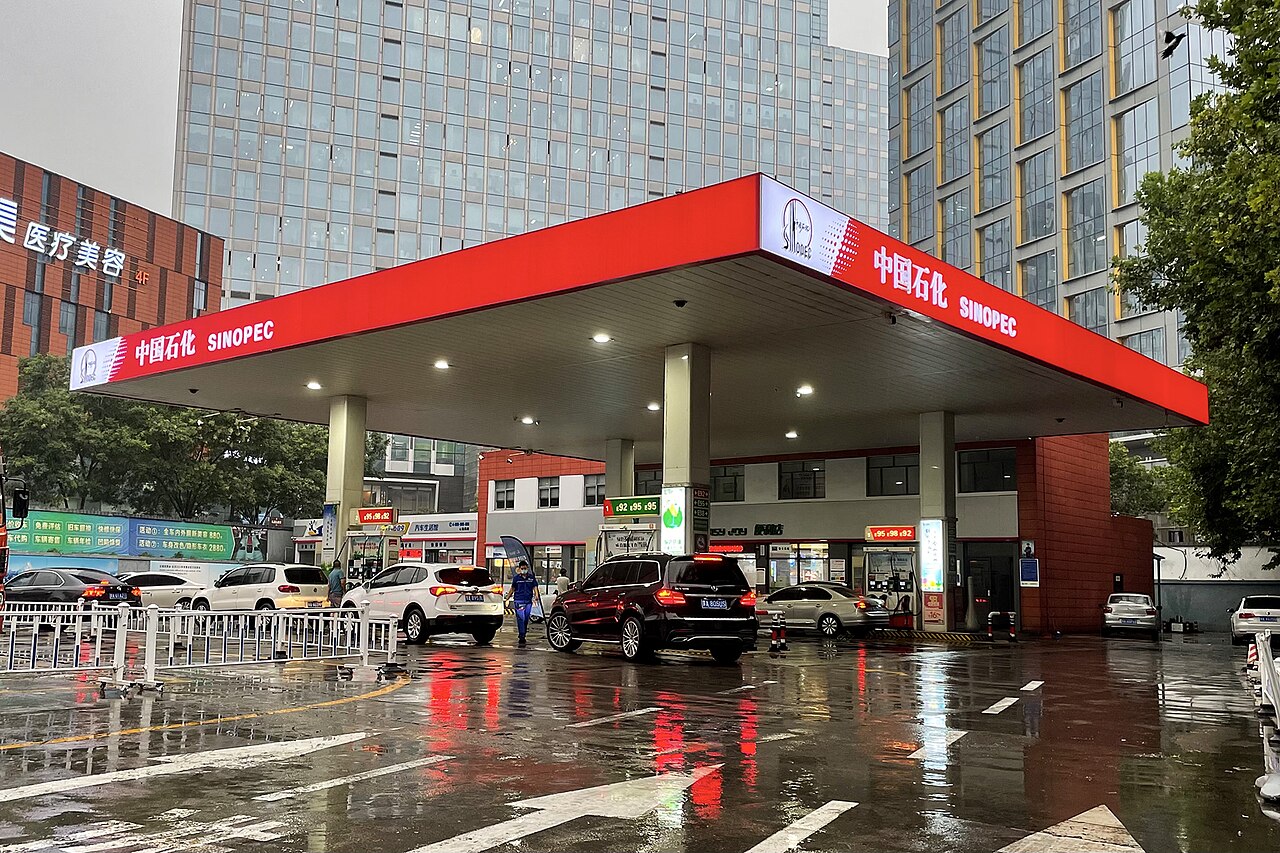
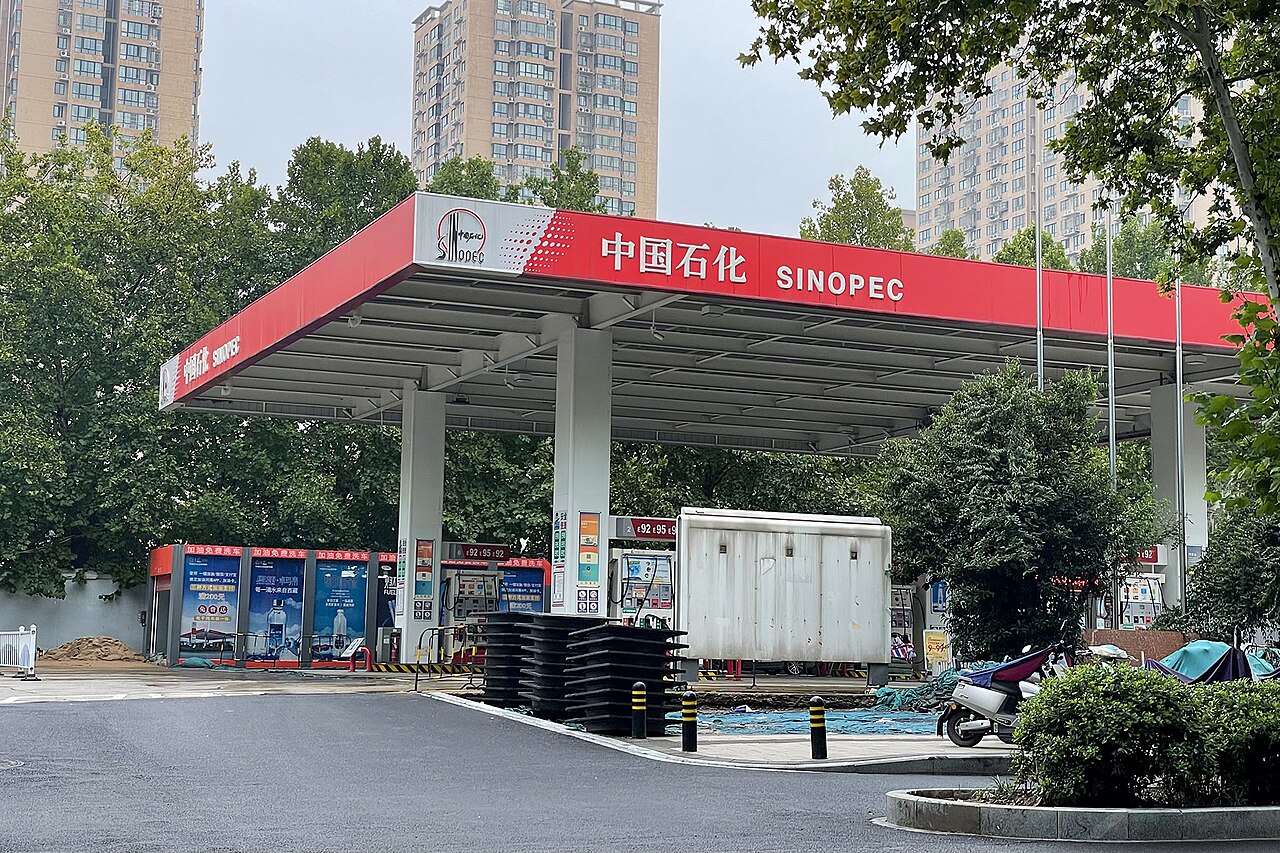
World's largest oil refiner and major state-owned Chinese enterprise.

MNXANL · CC BY-SA 4.0
Sinopec, officially China Petroleum and Chemical Corporation, is a Chinese state-owned oil and gas enterprise headquartered in Chaoyang District, Beijing. It is the world's largest oil refining conglomerate and the sixth highest revenue company globally, operating a publicly traded subsidiary listed in Hong Kong and Shanghai. The group is administered by the State-owned Assets Supervision and Administration Commission (SASAC) for the State Council of China.
- field
- Oil and gas, petrochemicals
- nationality
- Chinese
- known_for
- World's largest oil refining conglomerate; state-owned enterprise; sixth highest revenue company globally
- headquarters
- Chaoyang District, Beijing
- subsidiary_listed
- Hong Kong and Shanghai stock exchanges
- 2025_revenue
- RMB 2.78 trillion
Lore & Background
During the COVID-19 pandemic, Sinopec reported a loss of 23 billion yuan in the first half of 2020, but revenue increased 22% in 2021. The company demonstrated the 'one profit, five rates' performance method in 2023.
Reader's Guide
Sinopec's significance lies in its role as the world's largest oil refining conglomerate and a key state-owned enterprise under China's SASAC, reflecting the Chinese government's control over strategic energy assets. Its history illustrates the tension between profit and state policy, as seen in price controls, subsidies, and the 'valuation with Chinese characteristics' approach. The company's adaptation to market pressures, including job cuts before its IPO and responses to COVID-19, demonstrates its resilience. Its partnerships in EV infrastructure and alignment with China's Fourteenth five-year plan highlight its evolving role in energy transition. Sinopec's operations, from the Jiujang refinery to the deepest Asian oil well, underscore its technical and industrial reach, while its revenue of RMB 2.78 trillion in 2025 confirms its economic weight.
Did You Know?
- Sinopec became the world's largest producer of styrene-butadiene (SBC) after opening a one million tonne per year plant in Hainan in 2023.
Origins and the Road to Public Markets
Sinopec's story as a modern corporation traces back to the 1990s, when Beijing selected it among a cohort of massive state-owned industrial entities for a pilot restructuring program. The goal was to reshape these behemoths into state holding companies capable of partially listing subsidiary assets on public exchanges. The groundwork for this transformation lay in the 1980s, when the Ministry of Petroleum Industry and the Ministry of Chemical Industry began partial privatization, eventually feeding their combined asset base into what would become Sinopec Group.
A Web of International Alliances
Sinopec has woven itself into an extraordinary web of cross-border energy partnerships spanning multiple continents and decades. More recently, the Gulei Industrial Park in Fujian, a $4 billion venture with Taiwanese partners operating as Dynamic Ever Investments, became the only mainland petrochemical joint venture involving a Taiwanese company, reaching full operation in 2021.
Operating Under the State's Hand
One of Sinopec's most distinctive operational challenges is navigating the tension between commercial profitability and government policy. At the start of that year, selling fuel at pump prices was actually unprofitable, dragging down the company's financials. In a bold move, Sinopec and its rival CNPC curtailed production, triggering long queues at filling stations nationwide. The pressure worked: the NDRC approved a 15% price increase. Analysts watching the Shanghai exchange have dubbed this balancing act "valuation with Chinese characteristics." By 2023, Sinopec had formalized a performance framework called "one profit, five rates," evaluating the company not just on earnings but also on asset-liability ratio, return on equity, operating cash ratio, overall labor productivity, and R&D investment intensity, a methodology reflecting the evolving way Chinese state enterprises articulate the sometimes competing demands of profit and political mandate.
A Refining Giant on a Global Stage
Sinopec holds the distinction of being the world's largest oil refining conglomerate and ranks as the sixth-highest revenue company globally, a position underpinned by an enormous and diversified operational footprint. The Gaoqiao subsidiary, whose roots predate the creation of Sinopec itself, operates 75 plants producing finished petroleum products including fuels, oils, and organic compounds. The company's downstream heritage, stemming from its origins in the Ministry of Chemical Industry, led analysts to classify it as more of a downstream player than its upstream-heavy counterpart PetroChina. The group is administered by the SASAC on behalf of China's State Council, headquartered in Beijing's Chaoyang District, with its publicly traded subsidiary listed on both the Hong Kong and Shanghai stock exchanges.
Gallery
Frequently Asked Questions
What is Sinopec?
Sinopec, short for China Petroleum and Chemical Corporation, is a Chinese state-owned enterprise operating across oil, gas, and petrochemicals. It holds the distinction of being the world's largest oil refining conglomerate.
Who controls Sinopec?
The group falls under the supervision of China's State-owned Assets Supervision and Administration Commission (SASAC), which manages it on behalf of the State Council. In practice, this makes Sinopec a government-controlled entity rather than a privately held firm.
How large is Sinopec in terms of revenue?
For 2025 the company reported roughly RMB 2.78 trillion in revenue, which slots it in as the sixth-highest revenue corporation worldwide. That figure is driven largely by its dominant position in global oil refining.
Where is Sinopec headquartered and where can you buy its stock?
The company is based in Chaoyang District, Beijing. A publicly traded subsidiary is listed on both the Hong Kong and Shanghai stock exchanges, giving investors access in two major markets.
Why is Sinopec significant in the corporate world?
As the biggest oil refiner on the planet and a top-tier Chinese state enterprise, it anchors both China's domestic energy infrastructure and a large share of the global petrochemical supply chain. Its revenue scale also makes it one of the most economically influential corporations anywhere.
More in Corporations & Conglomerates 1-24
Elsewhere in the Corporations & Conglomerates universe
Spotted an error? Know more?
This is a living reference — every entry is fact-audited, and reader corrections feed straight into our audit queue. Suggest an edit · See this site's audit record